Historical · Rural Europe
The Rhythm of an Old Railway
Every railway has a meter. It is set by the length of the rails, the spacing of the sleepers, and the speed of the train, and it changes when any of those change.
Counting the joints
The four-beat clatter that people associate with trains comes from bogies crossing gaps in jointed rail. Modern continuous welded rail removes the gaps, and with them the beat.
What replaces it is not silence but a wide, steady rush, more like weather than percussion.
Signals and bells
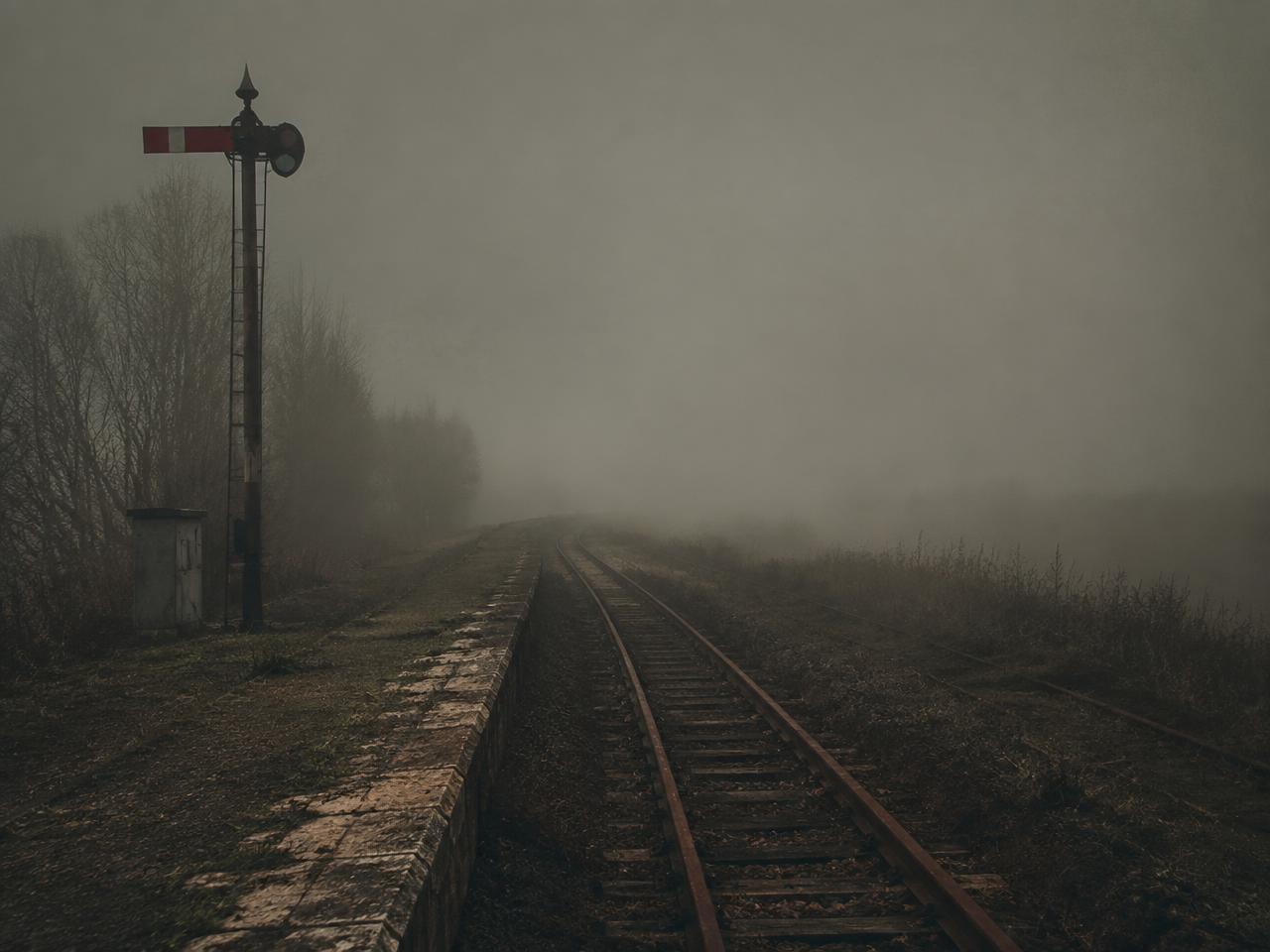
Mechanical signals had moving parts you could hear: wires, counterweights, the knock of an arm dropping. Their replacements are mute.
A station's acoustic identity is often carried by these small devices rather than by the trains themselves.
Recording a line
The best railway recordings are made from inside a carriage, where the track, the body of the train and the architecture outside all arrive together.
The archive holds two such recordings. Played back to back, they describe two different centuries of engineering.